Can AI Turn $100 Into a Dog Bed?
Current Scotty Index: $95.99
Position: SOXL
Bed status: Not yet
Bone status: Pending
AI status: Deployed
Scotty status: Unbothered
Everywhere I look lately, I see ads promising that artificial intelligence can help ordinary people build wealth with almost no effort.
Start with twenty dollars, they say.
Let AI do the trading, they say.
Watch your money grow, they say.
It all sounds wonderfully simple, which is usually when my internal warning lights start blinking like an old router in a thunderstorm.
I do not believe most of these ads.
But I am also a writer, and there is a dangerous little intersection where skepticism meets curiosity. That is where ideas happen. It is also where questionable financial decisions sometimes wander in wearing a tiny hat.
So I decided to run an experiment.
I created a small, isolated investment account specifically for this project. I started with roughly $100, which is money set aside only for this article. Not retirement money. Not bill money. Not grocery money. Not “Karen is going to ask me why the checking account smells like smoke” money.
This is experimenting money.
The goal is simple:
Can AI take a small amount of money and grow it aggressively through stock and options trading?
The more honest version is this:
Can AI do better than a regular human clicking buttons, chasing ideas, and pretending intuition is a strategy?
That second question became important almost immediately.
Trade Zero: The Human Contaminates the Experiment
Before the AI made its first official trade, I managed to interfere.
I bought about $100 of a small biotech stock called CGTX, Cognition Therapeutics. I would love to tell you this was part of a brilliant control-group design. I would love to claim I intentionally made an impulsive human trade so the
AI would have something to clean up.
The truth is less elegant.
I clicked buy.
Then I regretted it.
This turned out to be accidentally perfect.
The whole point of the experiment is to test whether AI can make better, more disciplined decisions than a human. And before the AI even began, the human had already wandered into the market, touched something shiny, and had to be gently escorted away.
So CGTX became Trade Zero: Human Interference.
The AI reviewed the account and recommended selling it so the experiment could start cleanly. I approved the sale. The position was closed, and the account settled at about $95.99.
In other words, before AI had a chance to lose my money, I lost a little of it myself.
This is what professionals call “establishing baseline performance.”
I call it organic stupidity with narrative value.
The Rules of the Experiment
The account being used is separate from my real investments. The AI can only work inside this small designated account. It cannot access my retirement account. It cannot access my regular brokerage account. It cannot grab money from somewhere else just because it suddenly feels inspired.
The current rules are:
- The experiment starts with approximately $100.
- The AI can recommend stocks, ETFs, and eligible Level 2 options.
- Cryptocurrency is not allowed.
- High-risk trades are allowed.
- The full balance can be deployed.
- The account is allowed to go to zero.
- No trade can risk more than the money inside the account.
- No uncovered short options or undefined-risk strategies.
- I must explicitly approve each trade before it is placed.
That last point matters.
This is not a magical robot with my wallet and a ski mask. It cannot simply run off into the market and start buying things without me. The AI can research, monitor, propose, evaluate risk, compare alternatives, and recommend action. But I still have to confirm the final order.
That creates one of the first real lessons of the experiment:
“AI trading” is not always as automatic as the ads make it sound.
There are still account permissions. There are still brokerage rules. There is still settlement time. There are still buying-power limitations. There are still platform-level safety checks. There are still moments where the AI can recommend a trade, but the human has to manually place it.
The machine may be clever.
The plumbing is still plumbing.
The Scotty Index
This project needed a benchmark.
Normal investing articles compare performance against the S&P 500, the Nasdaq, or some other broad-market index. I may still do that, but percentages alone can feel abstract, especially when the account starts with only $100.
A 20 percent gain sounds impressive.
A $19 gain sounds less impressive.
But a $19 gain measured against the needs of a small dog?
Now we have something.
That is how The Scotty Index was born.
Scotty is our small dog. He did not ask to be part of an AI investing experiment. He does not understand leveraged ETFs, bid-ask spreads, options decay, semiconductor momentum, or the difference between realized and unrealized gains.
At the time this experiment started, he was outside near the shed, probably inspecting the construction or taking a pee.
Possibly both.
At some point, I joked that if the AI succeeded, Scotty would get a new dog bed and a real bone from the butcher.
That joke immediately became the best measuring tool in the entire project.
The Scotty Index translates account performance into practical dog-based outcomes.

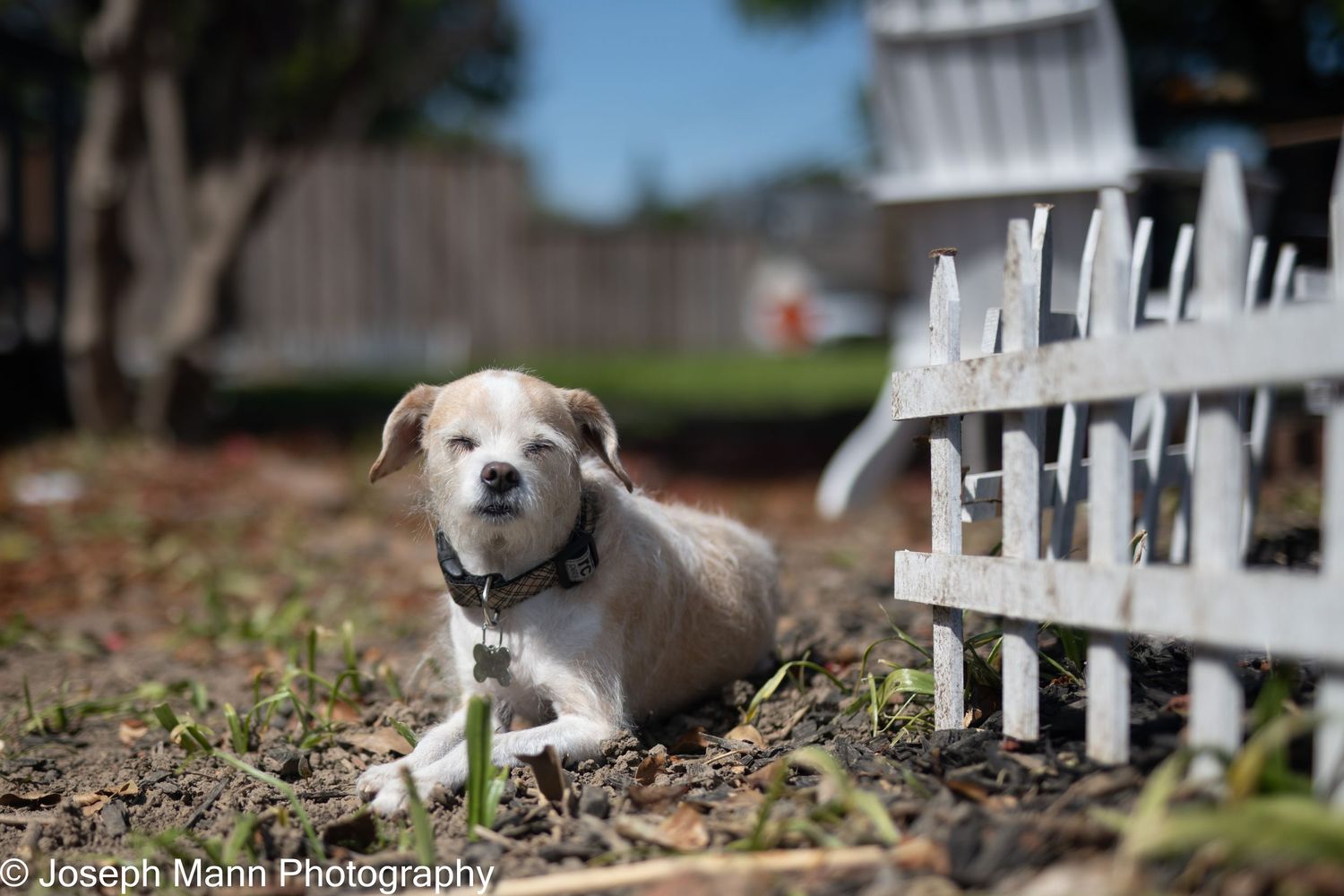

Preliminary Scotty Index Levels
$0:
The experiment is over. Scotty fires the portfolio manager and continues sleeping wherever he wants.
$25:
Possible apology treats.
$50:
A respectable butcher bone, but no bed.
$100:
Back where we started. Scotty remains unaware that his lifestyle was briefly tied to market volatility.
$150:
Basic dog bed territory.
$250:
Good dog bed, decent bone, maybe a toy.
$500:
Orthopedic bed, butcher bones, embroidered blanket, mild household resentment.
$1,000:
Scotty becomes a lifestyle brand.
$1 million:
Scotty acquires the shed and begins charging rent.
The Scotty Index does something important. It keeps the experiment grounded.
Because it is easy for investing language to become detached from reality. “The account is down 8 percent” sounds clinical. “The AI just lost half of Scotty’s bed” sounds different.
And that is the point.
Money is never just numbers. Even tiny amounts have meaning when attached to something real.
In this case, that something real is a small dog with no idea his future comfort is now partially dependent on semiconductor momentum.
The First AI Trade
Once CGTX was sold and the cash became available, the AI looked for its first real trade.
Because the goal is aggressive growth, it did not recommend a slow, sensible, broad-market fund. This is not a retirement portfolio. This is a test of the kind of claim made by AI investing ads, the ones suggesting that small sums can be turned into meaningful gains through machine-selected opportunities.
The AI reviewed several possibilities, including options. But there were practical hurdles. The option-chain review ran into access issues, and without being able to properly inspect a specific contract, its spread, liquidity, expiration, and maximum loss, the AI refused to recommend an option trade.
That was interesting.
A reckless human might have said, “Just buy a cheap call option and see what happens.”
The AI did not.
Instead, it recommended SOXL, a 3x leveraged semiconductor ETF.
This is not a gentle investment.
SOXL is designed to move roughly three times the daily performance of a semiconductor index. That means it can rise quickly when chip stocks move up, and it can fall just as dramatically when they reverse. It is not meant to be a sleepy long-term holding. It is a high-risk instrument, which fits the premise of the experiment.
The AI’s reasoning was that semiconductor and AI-related stocks were showing strong market activity, and SOXL provided aggressive exposure without the expiration clock of an option contract.
So the proposed first official trade was:
Buy $95.99 of SOXL.
The AI attempted to place the order after I approved it, but the actual automated order-placement call was blocked by platform safety checks.
That became another hurdle worth documenting.
The AI could access the account. It could review the account. It could recommend the trade. It could prepare the trade. It could even present the required risk information.
But the final automated order placement failed.
So I placed the AI-selected trade manually.
The order filled at an average price of $292.075, buying 0.328648 shares of SOXL.
That is the official beginning of the true experiment.
What This Blog Will Track
This will be an ongoing blog series.
I will post periodic updates showing:
- What the AI recommends
- What trades are made
- Whether trades were placed automatically or manually
- How the account performs
- What risks were identified
- How much human approval was required
- Whether the AI beats a simple benchmark
- Where the account stands on the Scotty Index
The goal is not to pretend this is a scientific laboratory study. It is not. This is one small account, one AI-assisted trading workflow, one skeptical writer, and one dog who deserves better bedding.
But it is a real-world test of a very real claim being marketed to ordinary people.
Can AI help someone invest with very little money and very little human input?
Can it identify better opportunities than a human would?
Does it actually reduce emotional decision-making?
Does it simply create new kinds of risk?
Does the automation work, or does the human still have to keep stepping in?
And most importantly:
Can it get Scotty a bed?
Early Lessons
Before the first real AI-selected trade was even completed, the experiment had already revealed several important hurdles.
First, the account had to be isolated. That matters. If AI is going to trade aggressively, it should not have access to money you cannot afford to lose.
Second, cash availability matters. After selling CGTX, the account showed cash before it showed spendable buying power. Settlement and brokerage rules still matter, even in an AI-driven workflow.
Third, options are not automatically better just because they offer leverage. The AI could not properly inspect an option contract, so it avoided recommending one. That restraint may be more important than the trade itself.
Fourth, automated trading is not frictionless. Even after approval, the platform blocked the AI from placing the SOXL order. I had to place it manually.
That is a major finding.
The advertisement version of AI investing often feels like this:
Deposit money. Press button. Become wealthy.
The real version, at least so far, looks more like this:
Deposit money. Set account boundaries. Accidentally buy a biotech stock. Sell it. Wait for buying power. Review risk. Hit a platform safety wall. Place the AI’s trade manually. Track whether the dog gets a bed.
Less glamorous, perhaps.
Much more interesting.
What I Expect
I do not expect the AI to turn $95.99 into a fortune.
It might make money. It might lose money. It might make one good call and then three bad ones. It might be useful as a research assistant but limited as an autonomous trader. It might reveal that the biggest problem in investing is not lack of information, but human behavior, market randomness, and the seductive power of a green buy button.
It might also surprise me.
That is why I am doing this.
I remain skeptical of the ads. But skepticism should be tested when possible. Otherwise, it becomes just another opinion sitting in a chair.
So the experiment begins.
The human has already made the first mistake.
The AI has made the first official selection.
The account is live.
The Scotty Index is active.
And somewhere outside, near the shed, a small dog remains blissfully unaware that artificial intelligence is now trying to improve his sleeping arrangements.